Creating Genuine Shetland Lace
Welcome To Shetland Lace Shawls
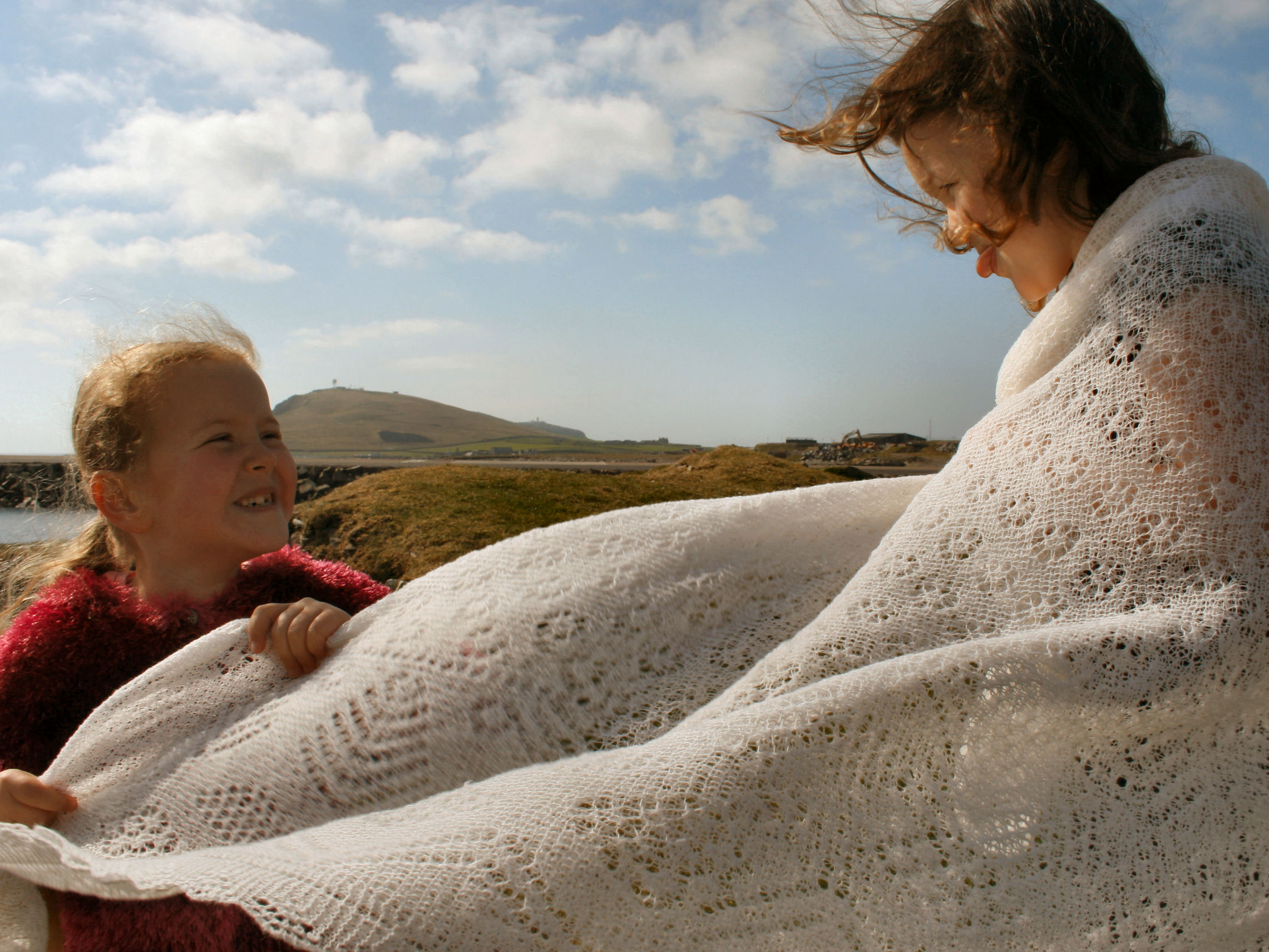
Shetland Lace Shawls is a Shetland based company specialising in genuine Shetland fine lace. Sheila Fowlie, who owns the company, was born into the fine lace knitting tradition of Shetland and has been knitting ever since.
Throughout the last few hundred years, Shetland fine lace has been known worldwide for its warmth, fineness, softness and intricate pattern detail. Royalty have appreciated its superior quality since the days of Queen Victoria. Over the last few decades, the name “Shetland fine lace” has been abused. Many companies selling inferior quality imitations from outwith the Shetland Isles have used it. Shetland Lace Shawls aims to give customers back the experience of wearing real Shetland fine lace.
“I am concerned that the local tradition of creating really distinctive high quality Shetland fine lace with the best wool in the world (from pure bred Shetland sheep) will die out. For this reason, I decided to start my own business, selling only genuine Shetland lace products, made in the traditional way in Shetland with Shetland wool.” - Sheila Fowlie
Shetland sheep are a breed which has evolved to suit the conditions in an isolated community over many centuries. They are small, fine-boned and their wool is the finest of all native breeds. It is thought that islanders have been breeding their flocks to maximise the softness and fineness of the wool for many years.
Shetland sheep tend to shed their fleece in spring. The new growth can cause a weak point when the fleece can be plucked or 'rooed' by hand. Rooed fleece tends to be softer as there are no cut ends. The wool around the neck is softest and perfect for fine Shetland lace.
The fine wool is hand carded, which straightens and separates the wool fibres and produces a roll of wool in preparation for spinning. If the wool is for really fine Shetland lace the spinner will spin only one strand. For 2 ply lace they would twist together two strands.
Knitting is a big part of Shetland's culture and history. Women have supplemented the household income and kept their families warm with 'Fair Isle' and 'Shetland Lace' knitwear for centuries. The need to sell knitwear reduced with the arrival of oil in the 1970s. However, the highest quality raw materials and an ability to create high quality distinctive knitwear survive.
To keep Shetland fine lace shawls in excellent condition, they must be washed and dressed (stretched) by the same tried and tested method used for centuries. A shawl is very carefully hand washed, cotton is threaded through the edgings' points, it is stretched over a pegged frame and allowed to dry naturally.